
Land
Battle Stirs Richmond
By DAVID
FERRY / Wall Street Journal
June 14, 2011

Dan
Murray, above, stands in a 55-acre property near Richmond's northern
shoreline that he hopes to sell to a developer.
Ramin
Rahimian for The Wall Street Journal
RICHMOND—A proposal to preserve a small
stretch of shoreline in this East Bay city has divided the community,
pitting developers and Richmond's growing Hispanic population
against conservationists and the city council.
The conflict involves a privately owned parcel
of largely vacant marshland on the edge of the working-class
city. Earlier this year, a new draft of Richmond's general plan
moved to designate the land as open space to protect wildlife
and prevent degradation. The property's owners balked at the
open-space plan, but it wasn't until a developer teamed up with
one land holder in a proposal to build 19 soccer fields and a "Latino-oriented shopping
mall" that tensions arose.
"I'm always looking for a niche market, and I feel the Latino
community is overlooked," said Terry Kwong, the developer.
Mr. Kwong, who built Richmond's Pacific East Mall across town
to cater to Asian shoppers in the 1990s, said he came up with the
idea to integrate a soccer complex with a shopping center to attract
Latinos. He approached Dan Murray, who owns 55 of the 100 acres
slated to be rezoned from light industry to open space, and made
plans to build a 200,000-square-foot commercial-sporting complex,
with indoor and outdoor fields, shops, a supermarket and a hotel
for tournament-goers. Once the zoning issue is settled, Mr. Murray
said, Mr. Kwong plans to purchase the land.
The remaining 45 acres are owned by a trio of property owners
who all oppose rezoning the land as open space. The city council
plans to vote on rezoning the area early next month.
Mr. Kwong's proposal seems to have struck a chord with many people
within the city's large Hispanic population. Though Richmond was
long a predominately African-American city, Hispanics now make
up 39.5% of the population, while blacks account for 26.5%, according
to 2010 census figures. About 19% of the population lives below
the poverty line, according to census data.

Robert Cheasty, above, heads an environmental group that
opposes the plan.
Ramin Rahimian for The Wall Street Journal |
With no Hispanics left on the city council after last year's election,
the city's largest Hispanic merchant association began rallying
Richmond's Latinos. Through shop owners in the city's predominantly
Latino shopping district and talks at Catholic churches, they say
they have garnered the support of a large portion of the Hispanic
community for the project.
But environmentalists and the liberal wing
of the city council have questioned the motives behind the development
proposal. Council member Tom Butt, who has sought to preserve
Richmond's northern shoreline as open space for the last decade,
said the proposed development was likely a "ploy."
"The soccer fields are just the bait," Mr. Butt said. "They're
the bait that has brought in the support from that community and
what they're really selling is a shopping center."
Rafael Madrigal, president of the city's largest Hispanic merchants
association, said he thinks the development could be a hub for
the community and might help keep young Hispanic men off the streets.
He said the project's opponents, which include the local chapter
of the Sierra Club and Citizens for East Shore Parks, a group that
seeks to protect the East Bay's shoreline, were out of touch with
the city's residents.
"The Sierra Club, they're nice people, but they're neglecting
the needs of poor urban youths and families in Richmond," Mr.
Madrigal said.
Mayor Gayle McLaughlin, a member of the Green
Party and head of the council's liberals, agreed that there is
a need for additional recreational space in Richmond, but argued
that the proposed development is simply in the wrong place. The
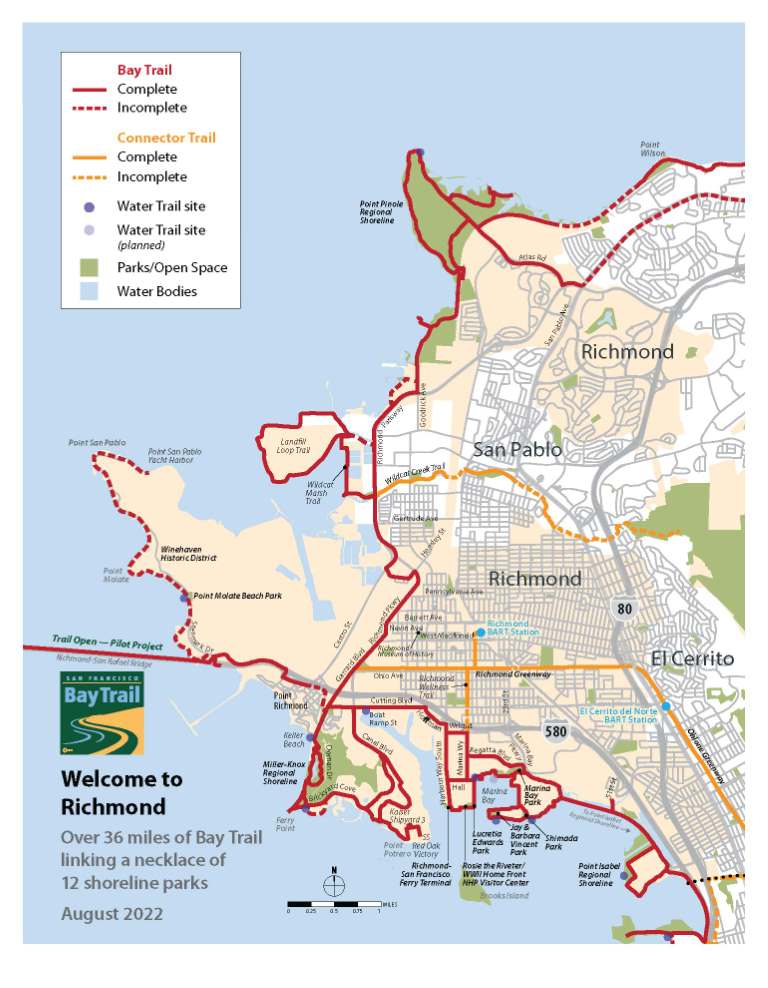
shoreline area is about five miles from the center of Richmond,
and accessible only by car. The city, the mayor said, is focused
on "smart growth," and
should expand near public transit and where infrastructure already
exists.
Robert Cheasty, the president of Citizens for East Shore Parks,
which has led the push to get the shoreline zoned for open space,
said the proposed complex would damage the ecologically sensitive
land. Mr. Cheasty pointed to studies by the city of Richmond and
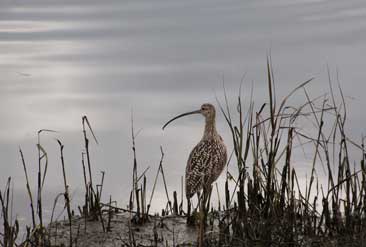
the East Bay Regional Park District that suggest 16 endangered
or threatened species have been observed or could exist in the
north shoreline, a broader area that includes Mr. Murray's parcel.
"I think that it's an atrocious use of a shoreline space
to build a mall out there," said Mr. Cheasty, a former mayor
of Albany. Mr. Cheasty's group hopes to see the bay's entire east
shore connected by a greenbelt of open space.
The site of the proposed development, which is owned by Mr. Murray
and his family through a limited liability corporation, housed
a phosphoric acid production facility until the late 1980s.
According to documents Mr. Murray filed with the city, less than
five acres of the property are wetland. A survey commissioned by
Mr. Murray found no endangered or threatened species on his parcel.
He said he fears Citizens for East Shore Parks is seeking to devalue
his land through rezoning, then purchase it for a low price.
"The biggest thing is the chilling effect that this sort
of precedent would show to the investment community around the
area," Mr. Murray said. "People who believe in Richmond
and who have invested in Richmond are going to have their property's
value stripped away from them."
Mr. Cheasty said his organization is prepared
to negotiate with Mr. Murray and pay a "reasonable market price" for the
land. "Let us take the property, if they want, and we'll be
happy to produce soccer fields and playing fields as well as open
space protection—and we'll give it back to the city of Richmond
for free," Mr. Cheasty said.
Mr. Murray responded that Mr. Cheasty and Citizens for East Shore
Parks have approached him to purchase the land, but that the offer
prices were below the property's potential value. |